
By Pragyna Shankar, MD, anesthesiology
Imagine a day when you wake up, drive to work and simply care for patients without worrying about insurance denials, preauthorization requirements or the litany of forms that take you away from patient care. Does that sound like the latest AI innovation designed to improve your practice and save you time? Quite the opposite, actually. This was my experience during my first medical mission trip to the beautiful hills of Tegucigalpa, Honduras.
Like so many of us who dreamed of an idyllic career in medicine, I hoped to care for vulnerable patients without the modern-day burdens that now consume so much of our time. As a pediatric anesthesiologist, I also dreamed of serving on medical missions, helping children and their families around the world. Fast-forward 20 years. With the responsibilities of marriage, children and medical debt, that dream had to wait.
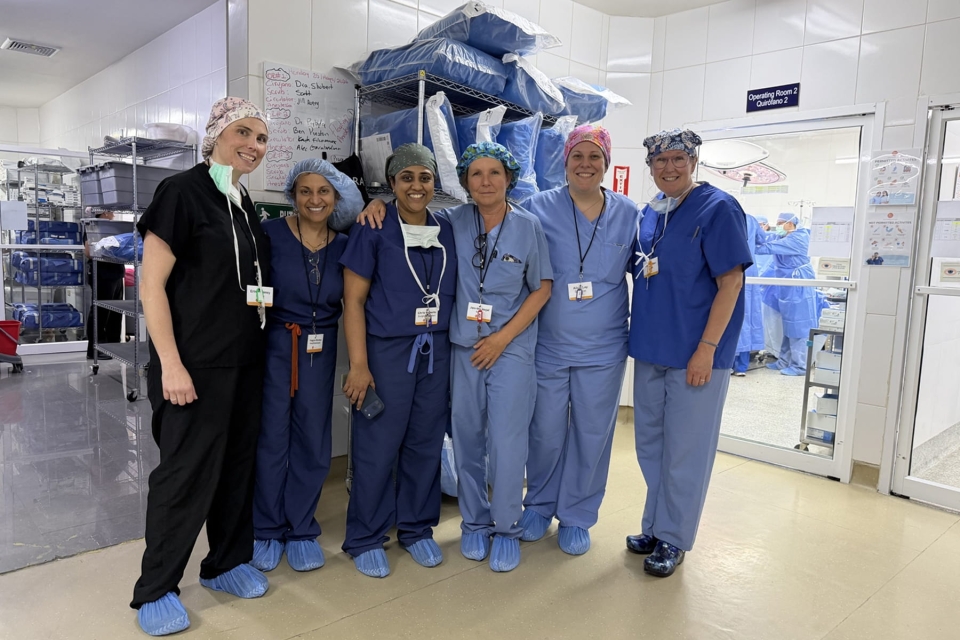
Now, with my children older, I’m able to return to that once-passionate dream. I had the opportunity to join a weeklong surgical brigade in Central America with a multidisciplinary team from across the U.S. Together, we performed both elective and urgent surgeries at a local One World Surgery hospital.
The majority of Hondurans receive their general healthcare through the public healthcare system, but funding challenges contribute to significant access issues. Only 46% of Honduran physicians are employed by the federal system, creating a supply-and-demand imbalance that I better understood through conversations with local physicians. One of our medical Spanish translators, who was trained as a family physician, couldn’t find a suitable clinical position and instead traveled 1.5 hours each day to work as a translator. Specialty training opportunities within the country are also limited, restricting access to specialized care. Public hospitals are often centralized in major urban areas and face resource shortages, leaving many rural patients with long wait times. Organizations such as One World Surgery, along with nonprofits including Operation Smile, World Surgical Foundation and Operation Rainbow, help bridge these gaps and expand access to surgical care.
The moment we arrived in Honduras, I knew the mission would be well organized. We stayed at the Moscati Center on a 2,000-acre campus that also included an orphanage, a surgical hospital and a free community clinic. It was inspiring to watch so many people come together in what truly felt like the ultimate team sport. Everyone understood their role, and with the help of outstanding translators, we quickly settled into a routine, completing 52 surgeries by the end of the week. It was a powerful reminder of what people can accomplish when united by a common purpose.
This collaboration also challenged us to be creative in caring for patients. In a setting where opioids are not commonly prescribed, we provided every patient with a nerve block or a series of nerve blocks to manage pain. I learned new techniques, expanded my own skills and helped care for several complex cases. We also cared for patients as young as 1 year old who needed procedures that would allow them to walk again or regain the use of their hands.
Equally meaningful was the sense of community among the volunteers. Breakfast and lunch were delivered to the hospital each day, and evenings were spent sharing meals, playing games, singing karaoke and reflecting on the day’s experiences. While we worked in the operating room, spouses and older children supported the mission in many ways, from assisting in the dental clinic and sorting medications to volunteering at the orphanage and helping maintain the campus.
One PACU nurse from Texas shared that her family chose this mission instead of a trip to Europe. She and her daughter both left feeling transformed, and her daughter began envisioning a future career in nursing or medicine. It was a reminder that the impact of service often extends far beyond the patients we care for.
When we packed our bags and returned home a week later, we all carried memories of how much we enjoyed the experience, and how deeply it had changed us. It was restful and restorative to reconnect with the art of medicine in such a meaningful way. It’s something I plan to do again, and I hope this essay encourages anyone considering a medical mission trip to take the leap.
The entire experience was humbling and transformative. In the end, I believe we were changed even more by the experience than we could ever hope to give in return.