Pickleball may be easy to learn, but it's surprisingly demanding on the body. Quick pivots, sudden stops and repetitive swings can all take a toll, especially if you're not prepared.
"I never want people to be afraid of playing pickleball," says Justin Stevenson, MD, sports medicine physician at HonorHealth. "It’s a great form of exercise because it combines movement with the social benefits of being active. The key is respecting the physical demands of the sport.”

What to watch for
Soft tissue strains and sprains are the most common pickleball-related injuries Dr. Stevenson sees, particularly in the knees, ankles and hamstrings.
"Lower limb injuries are often related to the rapid changes in directions on the court, especially when players are fatigued or playing too long or too much without adequate rest, recovery or warm-up phases," says Dr. Stevenson. “Shoulder pain from the repetitive motion of swinging a paddle is also a familiar problem.”
Fortunately, many of the habits that lead to injury are also the easiest to change. Here are the five easy steps Dr. Stevenson recommends to help you stay healthy on and off the court.
Step 1: Don’t skip (or skimp on) warm-ups
Heading straight onto the court without preparing your body is a recipe for trouble.
"A good warm-up routine prioritizes dynamic stretching and light aerobic activity with a focus on sport-specific movements that gradually increase your heart rate. A 10- or 15-minute routine within 10 minutes of starting to play is sufficient for most people," Dr. Stevenson advises.
Try incorporating:
- Light jogging or brisk walking
- Lateral shuffles
- Walking lunges with trunk rotation
- Arm and shoulder circles
- Shadow swings without a ball to practice mechanics and footwork
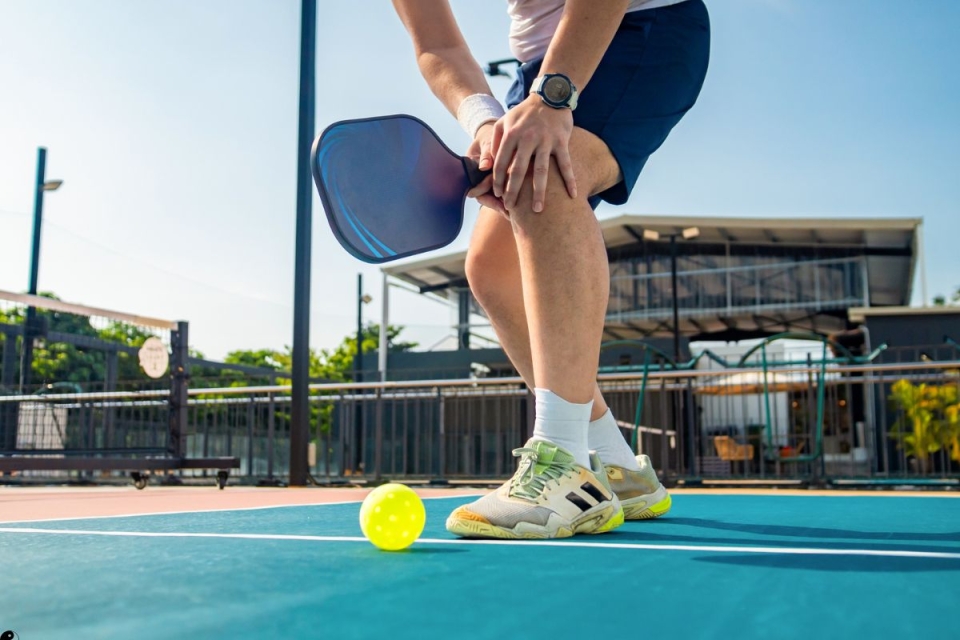
Step 2: Dress for success — not fashion
Those hot pink sneakers may look great on the court, but the right footwear does more than complete your outfit.
Proper footwear improves stability and reduces stress on the ankles and knees. Dr. Stevenson recommends court shoes instead of traditional running shoes because they're designed for the lateral movement pickleball requires.
Sports glasses or goggles with polycarbonate lenses can help protect against fast-moving balls and accidental paddle contact. "Eye protection is likely the single most effective and beneficial piece of equipment an athlete can use that can reduce injuries on the pickleball court," says Dr. Stevenson.
For players recovering from an ankle injury, a functional lace-up ankle brace may also provide additional support. Ask a sports medicine physician or physical therapist whether a brace is right for you.
Step 3: Build up gradually
Enthusiasm is great. Trying to play for four hours on your first weekend? Not so much.
One of the biggest mistakes new players make is doing too much, too soon. Muscles, tendons and joints need time to adapt to the unique demands of the game.
Gradually increase the length and intensity of your sessions and give your body time to recover between matches. Staying hydrated, prioritizing sleep and planning rest days can help reduce the risk of overuse injuries.
Step 4: Modify your game, if needed
Having arthritis, limited mobility or a previous injury doesn't necessarily mean your game days are over. "It’s best to get a pre-participation evaluation by a sports medicine doctor to ensure a safe return or introduction to the sport," Dr. Stevenson advises.
Depending on your situation, your care team may recommend:
- Playing doubles instead of singles to reduce the amount of court you need to cover.
- Shortening your playing sessions.
- Focusing on technique, rather than speed or power.
- Using a brace when returning from certain injuries.
Small adjustments can keep you active while lowering your risk of reinjury.
Step 5: Know when to stop playing
Sometimes the smartest play is knowing when to call it a day. Stop and seek medical attention if you notice a deformity, suspect a break, or can’t put weight on an injured leg or ankle.
Signs to get help include:
- Chest pain
- Significant shortness of breath
- Lightheadedness or fainting
- Vomiting, confusion or balance problems after a head injury
"In Arizona, players also need to pay attention to symptoms of heat illness like dizziness and headache, especially during the warmer months," says Dr. Stevenson.
Stopping your match early can prevent a minor issue from becoming a medical emergency.
Stay in the game
The bottom line? "If you're having pain that's limiting your ability to play or enjoy the game, don't ignore it," says Dr. Stevenson. "Getting evaluated early can often help athletes recover faster and return to the activities they love."
Whether you're picking up a paddle for the first time or playing several times a week, taking care of your body can help keep you in the game for years to come.