If you’ve ever felt a cramp in your leg that just won’t quit, you might chalk it up to getting older, overdoing it at the gym or just having a bad day. But sometimes, it’s more serious.
“Peripheral artery disease, or PAD, is a narrowing or blockage in the arteries of legs that’s caused by plaque that develops gradually over time,” says Hasan Aldailami, MD, vascular specialist at HonorHealth Heart Care - Vascular - Osborn.

For those with more advanced PAD, invasive surgery is often necessary. But HonorHealth was recently selected to pioneer a new treatment that’s giving these patients an easier, more effective option — no overnight hospital stay required.
How arteries turn to stone
Symptoms of PAD can escalate quickly. When calcium builds up in those narrowed arteries, the vessels become stiff, less responsive and harder to treat with traditional methods like inflatable balloons or stents that hold the artery open.
“In more advanced cases, patients can have constant pain in their feet,” says Dr. Aldailami, “and in the most extreme cases it can lead to limb loss.”
For patients with heavily calcified disease, the challenge isn’t just opening the artery — it’s finding ways to get traditional treatments to work with this rigid plaque blocking the way.
Opening doors (and arteries) with sound waves
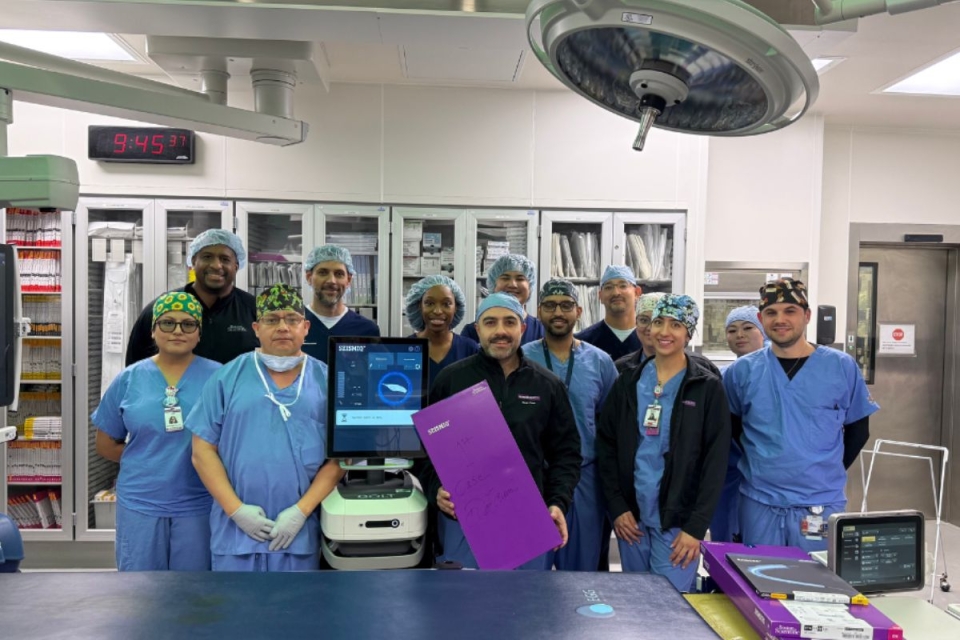
Widely introduced in 2016 as an alternative to inflatable balloon catheters, intravascular lithotripsy (IVL) uses controlled acoustic pressure to gently break up hardened calcium within the vessel wall. HonorHealth is among the first in the nation to use a new laser-generated version of this tech that is even more effective.
“There's more ability to deliver specific, directed amounts of energy,” Dr. Aldailami explains. “It allows the physician to really focus the energy to where the plaque is the hardest, so you can get a better outcome.” Think of it less like pushing through a barrier and more like softening it first so surgeons can place a balloon or stent.
This system is designed to deliver targeted energy with real-time feedback, helping our care teams tailor treatment to each patient’s unique anatomy while minimizing impact to surrounding tissue.
How intravascular lithotripsy saves lives
For people living with advanced PAD, especially those who haven’t had success with traditional treatments, this new option can mean:
- Better preparation of the artery
- More successful stent placement or angioplasty
- A gentler experience for surrounding tissue
- Improved blood flow where it matters most
And because it’s designed for a range of arteries in the legs, it offers flexibility for treating many complex cases. Even better, patients can go home the same day. “It’s not a particularly painful procedure, just some local anesthetic where the catheter enters the skin,” Dr. Aldailami notes.
Care that’s rooted in community
At HonorHealth Heart Care - Vascular, bringing in advanced tools is only part of the story. The bigger picture is how and why they’re used. “Because we are a non-profit community focused health system, we genuinely care about the community that we treat and about their outcomes,” says Dr. Aldailami.
That philosophy shapes every decision, especially when it comes to complex conditions like PAD. “It’s about putting people first,” he adds. “Our job is to make sure that this community does well and our patients do well."