Thomas B., a retired IT specialist from Gilbert, Ariz., once was so weak that a wrinkle in a kitchen rug could potentially trip him if he wasn’t careful.
For more than a decade, he suffered from an autoimmune disease known as polymyositis, an inflammatory myopathy that severely weakened major muscles in his arms and legs.
Thomas had been an accomplished amateur wildlife photographer, and his collection of bird photos is nothing short of stunning. But he abandoned his hobby after he was no longer steady on uneven ground, even falling once several years ago while on a trail in Phoenix’s South Mountain Park.
For years, Thomas was told he simply needed to spend more time at the gym. But when a doctor noticed the difficulty Thomas had while simply trying to step up onto an exam table, he was referred to a neurologist who in turn referred him to Todd Levine, MD, neurologist and medical director of the Neuroscience Division at the HonorHealth Research Institute.
The exact cause of polymyositis is unknown. The disease shares many characteristics with autoimmune disorders, which occur when the immune system mistakenly attacks healthy body tissues.

Stopping the disease’s progression
Thomas was once so weak that he needed both hands to open the door to his car or work the nozzle at the gas pump.
His condition stopped progressing after Dr. Levine initially put Thomas on the standard-of-care therapy: a combination of immunosuppressants and steroids. Physical therapy helped him regain some strength. But he was bothered by the constant hunger, weight gain and aggressive behavior that resulted from steroids.
In January, Dr. Levine cleared Thomas to enroll in a new clinical trial for a medication. Ever since, Thomas has become progressively stronger each time he returns to Dr. Levine for monthly checkups.
“I’m seeing a measurable muscle strength increase,” shares Thomas. “I’m definitely feeling much better, much stronger. I’m nowhere near as vulnerable and weak while walking.”
Gaining back muscle strength
He recently lifted several 20-pound cinder blocks while build a backyard barbecue. “I couldn’t have done this just six months ago,” he says.
And it’s now easier to carry heavier loads of groceries, though he’s still not able to lift a case of bottled water. “The worst part is getting up from a seated position, walking uphill and downhill, and stairs are still a challenge,” explains Thomas.
Still, he is pleased with his progress and describes the care he’s received from Dr. Levine as “excellent.” He’s very pleased with his introduction to the benefits of clinical trials, and the team at the HonorHealth Research Institute, especially clinical research coordinator Rebecca.
“I’m very hopeful with the current medication,” says Thomas. “I have a much better outlook now, and I’m looking forward to enjoying my retirement.”
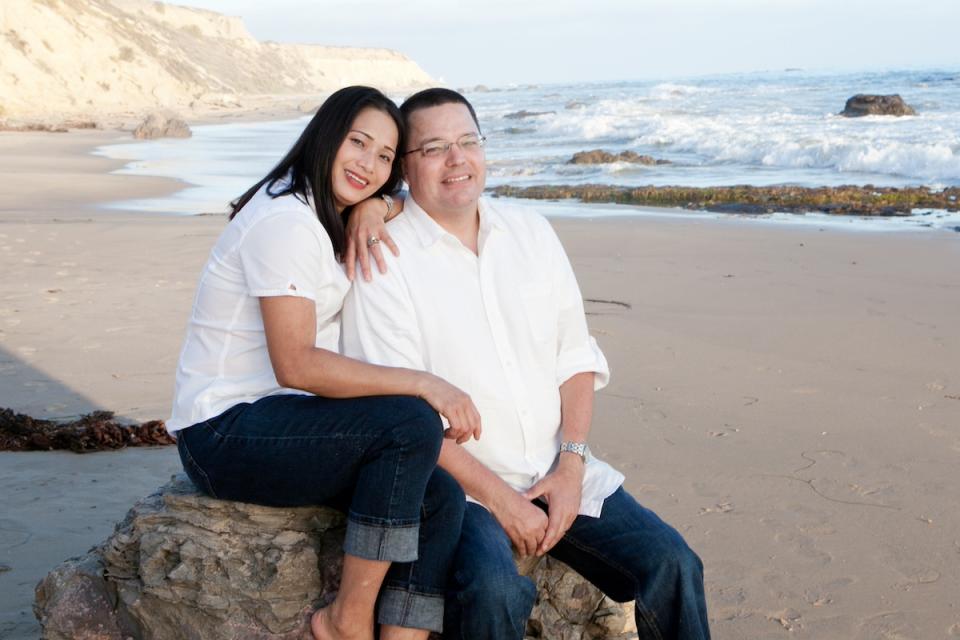
He is also anticipating another trip to Vietnam, birthplace of his wife, Ann, whom he met more than 20 years ago while living in the Bay Area. “I’m looking forward to being able to climb the stairs to the temples,” he adds.
Offering patients innovative treatment options
The HonorHealth Research Institute is at the front of today’s most important health questions. Established in 2005, the Institute has become a patient destination for treatments often available nowhere else.

When should you see a neurologist for care?
Some medical conditions require the expertise of a specialist. That’s particularly true when signs and symptoms indicate a potential brain or nervous system issue. Understand when you should see a neurologist.
What you need to know about infusion therapy
Did you know there are more than 600 known neurologic or nervous system diseases? Read more about how a treatment called infusion therapy can be used to ease or eliminate the symptoms of these conditions.