
Global Health Program
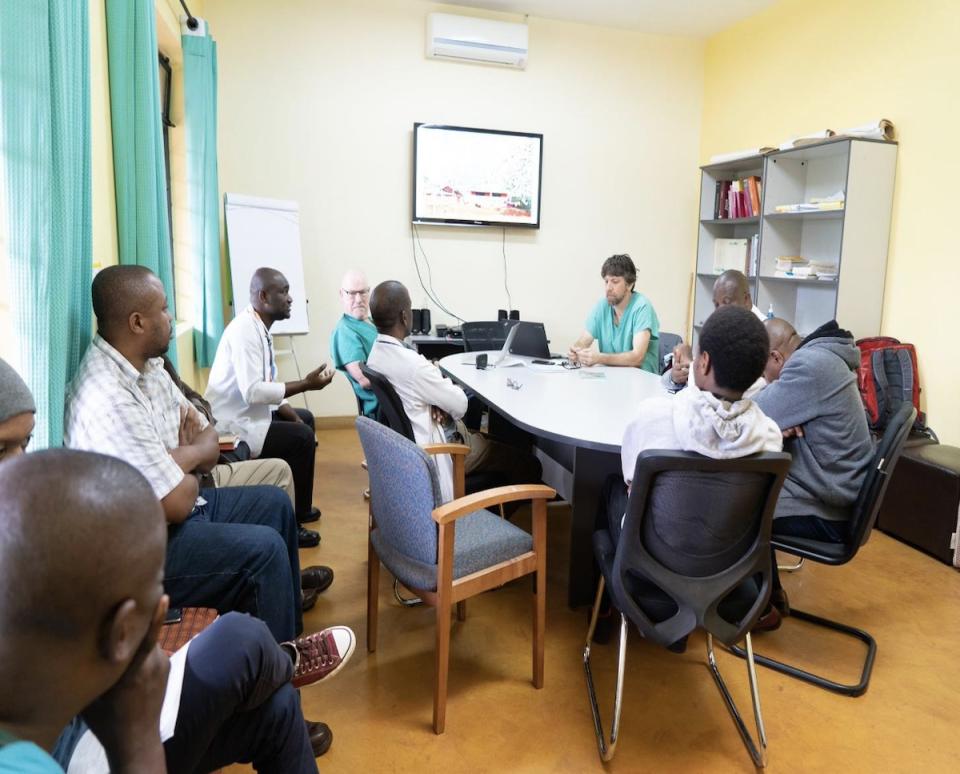
The Global Health program is dedicated to promoting health equality locally and internationally through strategic partnerships with other countries. A key focus of the program is the development of best practices and culturally informed care, which is crucial in our increasingly diverse global healthcare landscape. This program has forged a strong partnership with NSK Hospital, the Oltrumet Hospital in Arusha, Tanzania, and the K2 Foundation.
Program requirements
- Annual rotations
- NSK Hospital and affiliate clinic in Arusha, Tanzania
- This is a two-week primary and specialty care rotation
- Bi-Monthly telemedicine case conferences
- Collaborate with the Medical Council of Tanganyika
- ECHO Model of Experiential Learning
- Annual live (virtual) symposia with host sites
- Showcase scholarship
- Joint program evaluation and improvement for the next cycle
Eligibility
HonorHealth Residents and Fellows (PGY 2 and higher) in good standing with their program and within Academic Affairs are eligible to apply for the Global Health program.
Who should apply
This course is designed for residents and fellows genuinely interested in global health and caring for medically underserved populations. It offers a unique experience to explore different cultures, witness a different spectrum of diseases, and understand the challenges of caring for the sick in areas with constrained resources. Many people find these experiences meaningful and transformative during training. However, global health experiences can be deeply challenging and much different from what people are used to in the U.S. Applicants must be realistic about this before applying to the program.
Applicant characteristics and selection criteria
- Demonstrate a genuine interest in global health and care of the medically underserved.
- Exhibit professionalism, responsibility, maturity, independence, flexibility, humility and cultural sensitivity.
- Possess realistic expectations about the challenges of living and training in a resource-limited setting, including staffing and equipment.
Requirements for passing
- Complete the pre-travel training sessions, reading assignments and other prep work as assigned.
- Complete the two-week clinical rotation.
- Submit a two- to four-page report reflecting on how this experience informed your understanding of the provision of care within the U.S.
- Team presentation of project experience to peers and faculty.
- Follow-up engagement with the host site by leading at least one case conference or CME event during the academic year.
- Complete a research or quality improvement project with the host site through ResQIPS (e.g., interventions to help mitigate and manage chronic diseases treated in medical mission trip clinics, implement WHO patient safety checklist).
Clinic Sites in Arusha, Tanzania
- NSK Hospital: a private, for-profit hospital built in 2016 by a fourth-generation Indian Tanzanian family in the center city of Arusha.
- Primary care facility, inpatient services, three operating rooms, a four-bed ICU, an ER, a NICU, maternity ward and a 50-bed ward capacity.
- Oltrumet District Hospital: a rural government healthcare facility located on the outskirts of Arusha, primarily serving the region's Maasai and other medically underserved populations.
- Outpatient, including a Communicable Treatment Center, inpatient, maternity ward, general surgery and emergency services.
- Outpatient, including a Communicable Treatment Center, inpatient, maternity ward, general surgery and emergency services.