Struggling with a wound that is slow to heal? Many factors play into how quickly and easily a wound heals, including how deep and large the wound is, how clean it is and the general health of the patient. In fact, patients with diabetes, circulatory problems, infections, arthritis and other autoimmune disorders may struggle with wounds that would ordinarily heal quickly in a healthy individual.
HonorHealth has a multidisciplinary team of wound care specialists that can help. Sean Brimacombe, MD, is an orthopedic surgeon, wound care specialist and independent member of the HonorHealth Medical Staff.
“We handle all acute and chronic wounds, from head to toe,” explains Dr. Brimacombe.
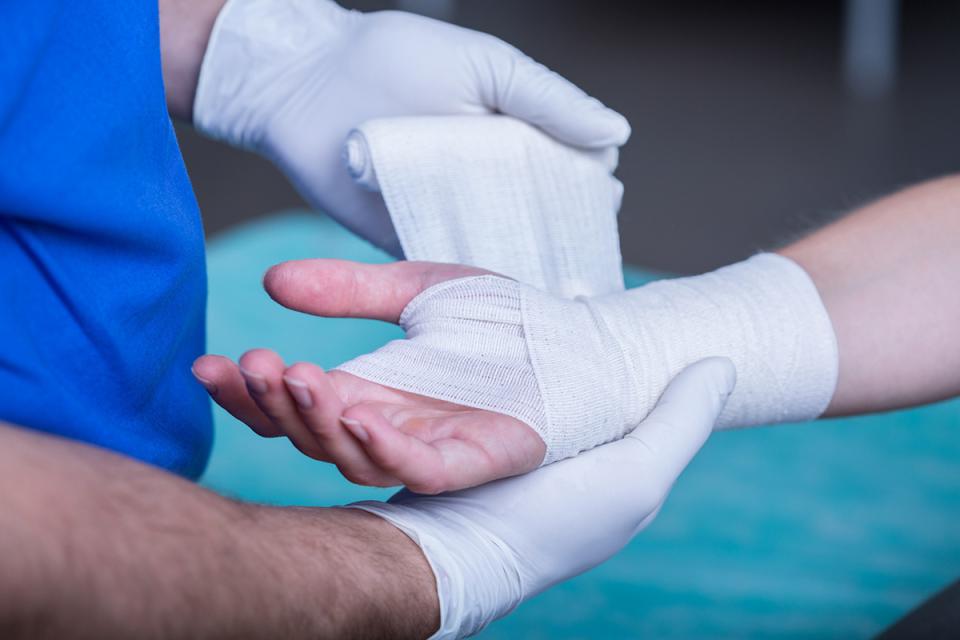

When to see a wound care specialist
Many patients take care of a small wound at home by washing it, applying antibiotic ointment and keeping it bandaged. However, there are signs to watch for that indicate you should see a wound care specialist to have your wound evaluated and treated.
If a wound is gaping, deep or won’t stop bleeding, it’s a good idea to get it checked out right away. In addition, you should see a doctor if you experience a bite by an animal or a human, or are injured by a rusty object, as you may require additional treatment.
It’s important to look for signs of infection too. This includes an increase in pain or swelling, odor, drainage or an expanding area of redness around the wound site. Other signs of infection include a wound that is warm to the touch or a fever above 100.4 degrees. An infected wound has the potential to become a medical emergency, so see a doctor right away if you experience these symptoms.
If your wound simply lingers for weeks without healing, it has become a chronic condition and warrants a visit to a doctor.
“A wound care specialist is equipped to help with any kind of hard-to-heal wound, whether it’s chronic or acute,” explains Dr. Brimacombe.
Treating your wounds
HonorHealth Wound Care specialists offer a range of treatment options. First, the Wound Care team will review your medical history to determine why your wound is not healing. You will receive an evaluation, and may also have diagnostic tests or lab work done.
Then, the Wound Care team will partner with you to develop a treatment plan that starts you on the road to healing. Treatment options include:
- Wound debridement (removal of dead, damaged or infected tissue)
- Negative pressure wound therapy
- Biologic therapies and dressings
- Limb salvage
- Arterial and venous angiography
- Doppler evaluation
- Transcutaneous oxygen monitoring
- Hyperbaric oxygen therapy
- Infusion services
- Radiology imaging
- Diabetic and nutritional counseling
- Home health services
Getting back to what you love
Wounds that are slow to heal can get in the way of your daily routine, but HonorHealth’s wound care experts are there to help at any time.
“We’re often the last resort, but we’re happy to be the first,” says Dr. Brimacombe. “Our goal is to heal your wound and get you back to your day-to-day life.”
Related content

Healing done right
Struggling with a wound that won’t heal? Discover how HonorHealth’s expert team and advanced therapies can help you finally find relief – and why early treatment can make all the difference.
Wounds be gone
Got a wound that just won’t heal? Discover how our experts tackle everything from stubborn ulcers to surgical and radiation-related wounds – and help get you back to feeling like yourself.
Take a bite out of pain
Got a bite or sting that’s not healing like it should? From animal injuries to insect encounters, our team provides expert care to reduce pain, prevent infection and help you heal with confidence.